
Last updated on May 26, 2026
Recently, I had the chance to experience another Sci-Fi game, but this time with a roguelike/roguelite twist.
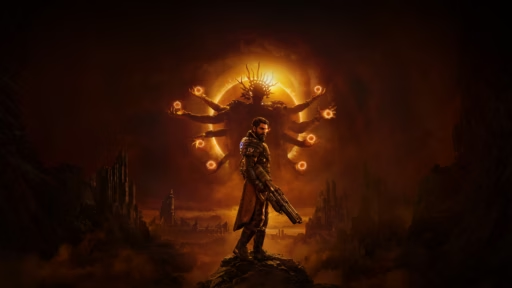
Developed by Housemarque and published by Sony Interactive Entertainment, the game called “Saros” is, without a doubt, one of the main candidates for Game of the Year.
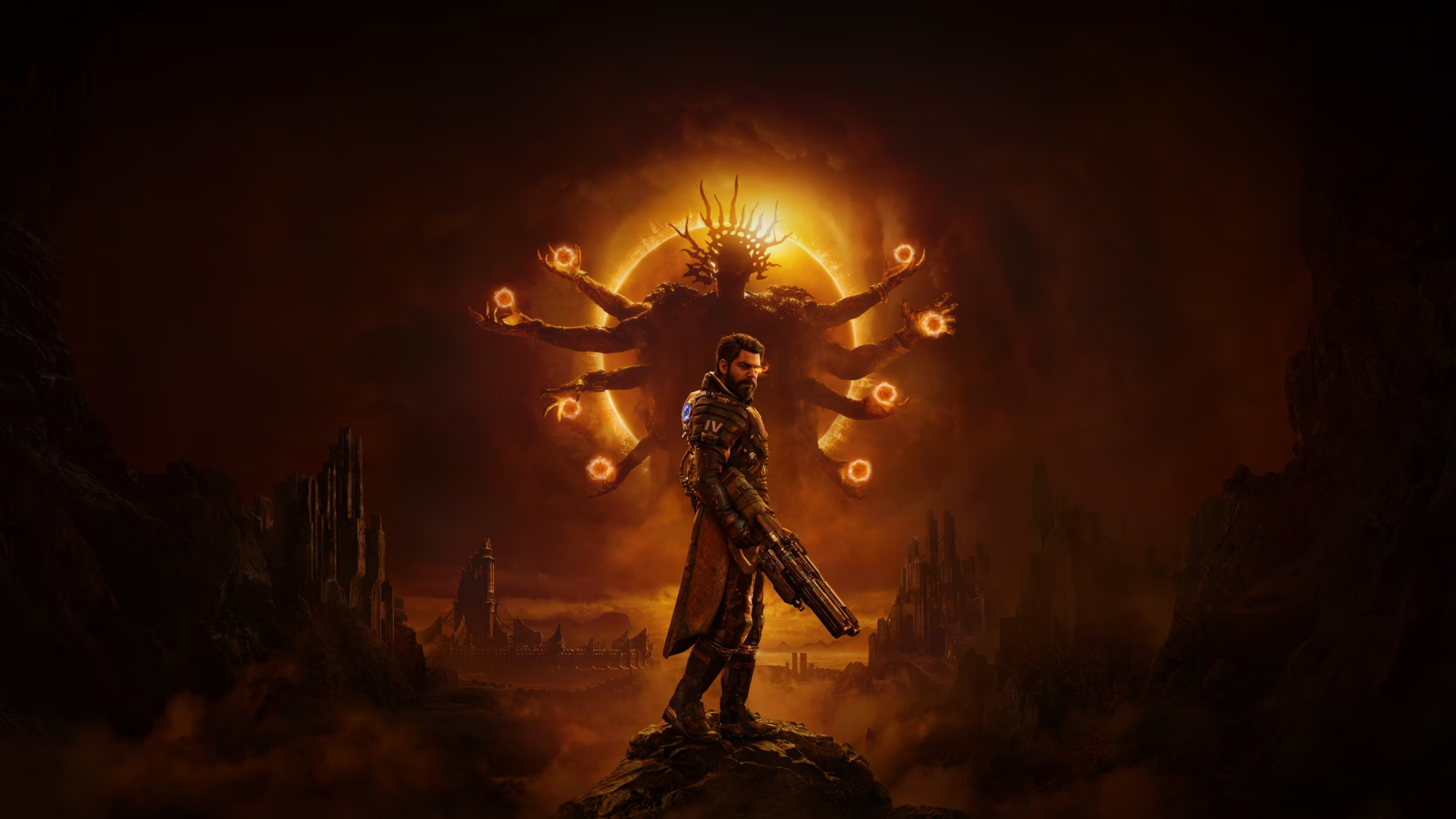
At first glance, Saros appears to be a sequel to their previous title, Returnal. While it’s not a full sequel, the gameplay style, aesthetic, and gunplay are practically identical to Returnal, on steroids, of course.
There’s also a strong chance that both games exist within the same semi-connected universe, similar to the Remedy Connected Universe, where the Alan Wake series connects with the Control series, and so on.
Special thanks to Sony Interactive Entertainment EUROPE and Smartpoint Consulting for providing the review code.
Returnal Squared
Throughout my entire experience with Saros, I felt the care and love that the developers poured into every corner of it. Everything felt fluid and polished, designed to satisfy not only genre fans but also people looking to jump into roguelikes for the very first time.
Saros made me realize that both it and Returnal are perfect entry points for someone who has never touched a roguelike or roguelite before.
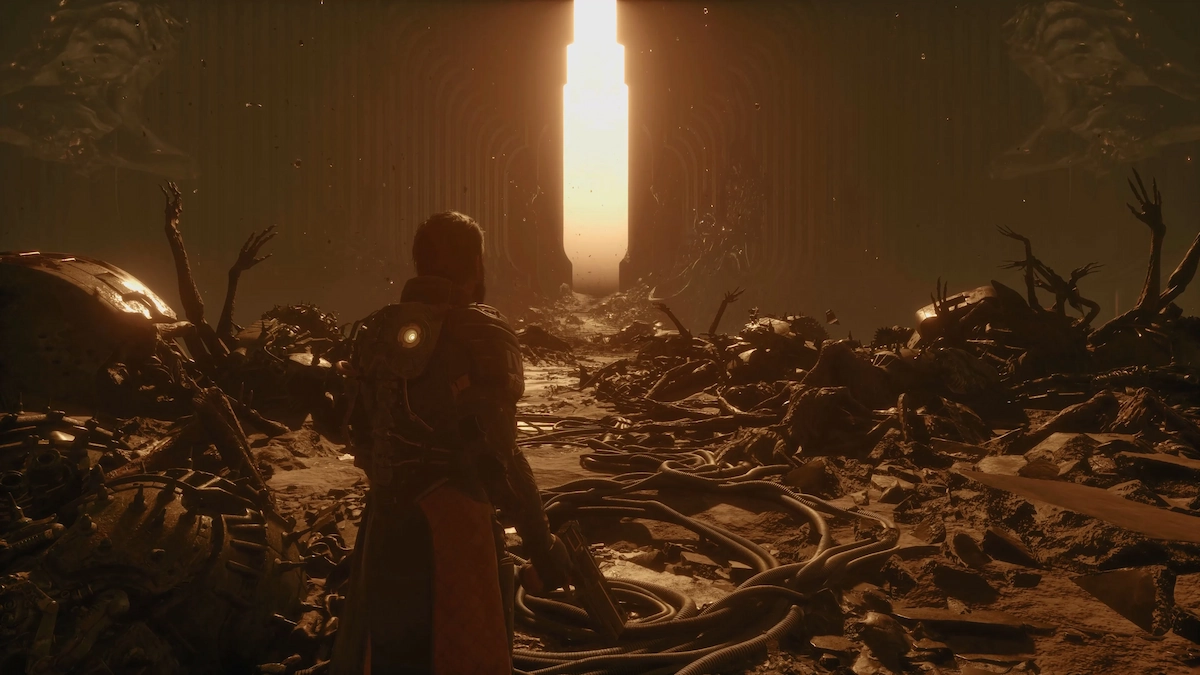
Where Will This Road Take Me?
Housemarque has delivered an exceptional game, and I’d go as far as calling it their Magnum Opus. But the question is: what does it do differently from Returnal? To put it plainly, Saros does everything Returnal couldn’t, and at a completely different level.
It’s a more accessible game with more combat and a focus on permanent progression, where the main character grows stronger with every death.
The difficulty has also been significantly reduced, with a wealth of accessibility settings allowing you to increase damage and armor to your liking. At its core, Housemarque made sure to deliver a bullet-hell title just as spectacular as before, with new mechanics and more terrifying bosses.
One of the most beloved new mechanics is the “Soltari Shield”, which absorbs enemy projectiles and converts them into energy for a counterattack. Not all projectiles can be absorbed, however: yellow or red ones are strictly off-limits. Red projectiles can deal damage to you, while yellow ones simply won’t charge your special attack bar.
The main attraction in Saros comes directly from the Skill Tree. As mentioned, this game leans more toward roguelite than roguelike (like Returnal), so even if you die, you can still progress through a massive skill tree filled with passive abilities.
- Resilience (invest points to increase your health)
- Command (increases your shield capacity)
- Drive (grants more “Lucenite”, the currency earned from enemies for upgrades)
These are the three main attributes to keep in mind throughout your playthrough. One interesting detail you might easily overlook: all three attributes can have a negative impact in the late game, especially if you over-invest in any single one.
Visually, It Shines on PS5 Pro
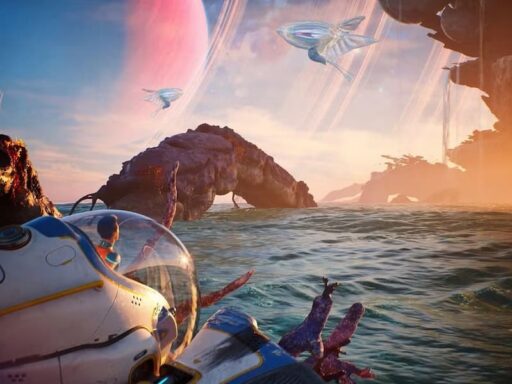
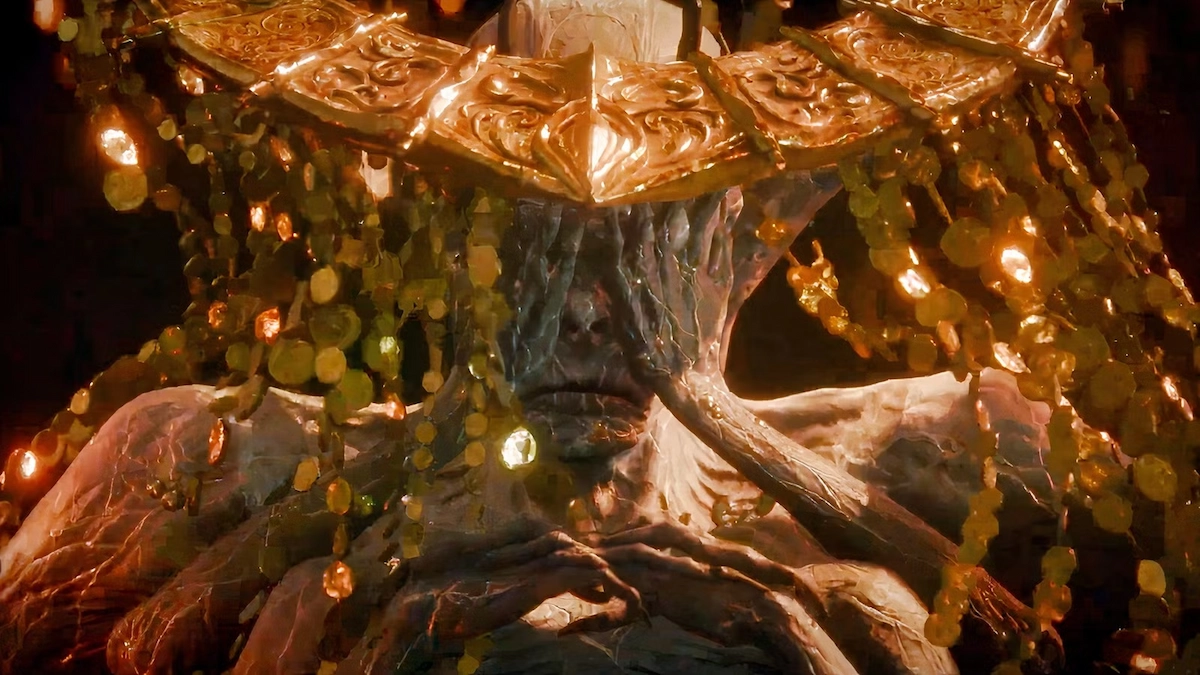
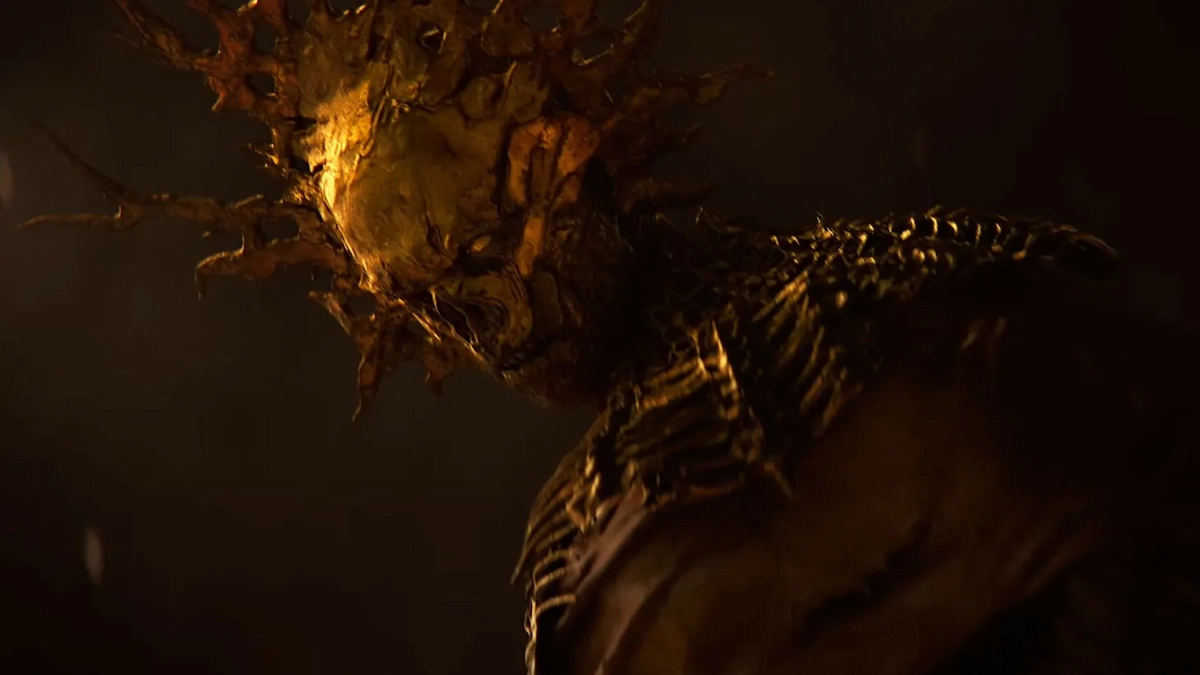
The graphics and artistic style of Saros are, without question, the reason I started following this title from the very first State of Play reveal. I’m a huge Cosmic Horror fan, especially the works of H.P. Lovecraft, and that influence is clearly visible throughout. The color palette is neither strictly cold nor warm, sitting somewhere in between.
Built around the sun and the eclipse, the game doesn’t neglect color at all, leaning into a darker shade of orange that is far superior to the infamous “piss filter” we encountered in games 10 to 15 years ago.
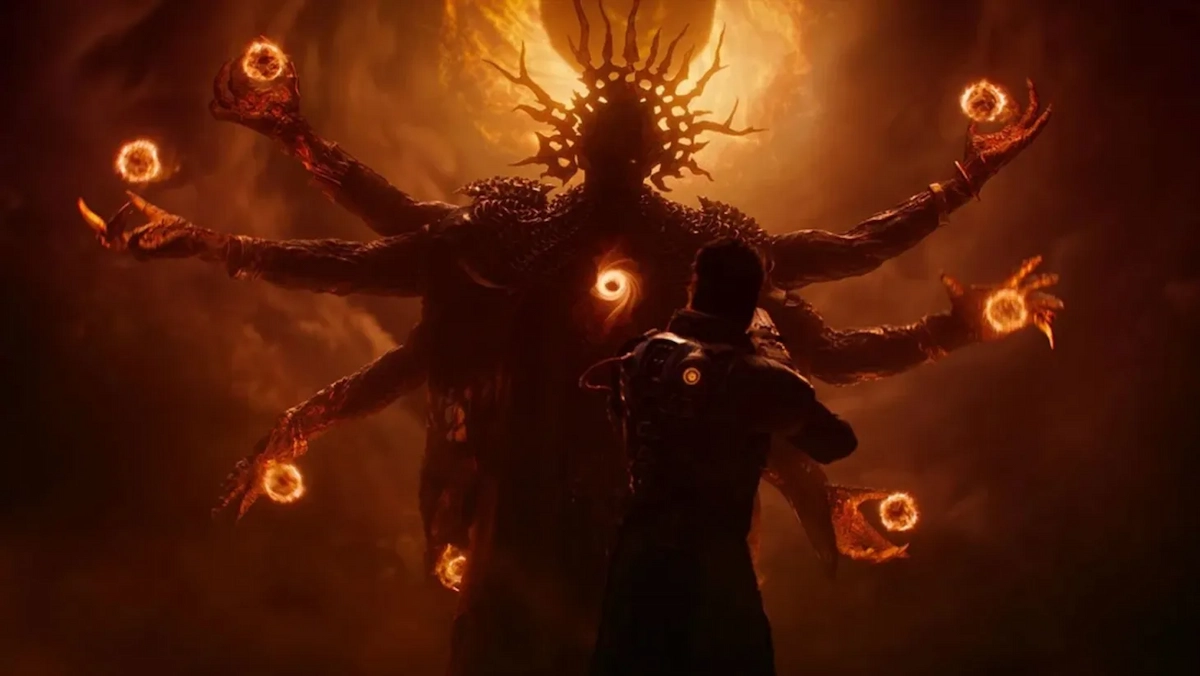
The enemy and boss designs are fairly similar to those in Returnal, though here they lean more toward the spectral, and perhaps even the biblical, if I can call it that.
One thing that genuinely bothered me: the developers decided to cap cutscenes at 30FPS, which felt rather odd given that gameplay runs buttery smooth throughout.
A New Generation of Soundtrack
The sound design is, frankly, absolutely incredible. I could spend hours writing about how the audio and haptics elevated my experience tenfold. First and foremost, as a bullet-hell, the precision and crispness of every gunshot is unrealistically well-crafted. The sounds are perfect for the environment, delivering a strong sense of isolation.
Compared to Returnal, which also had an excellent soundtrack, Saros feels like a step above. This is especially true during projectile absorption and the parry mechanic unlocked later in the game.
Carcosa From Arrakis
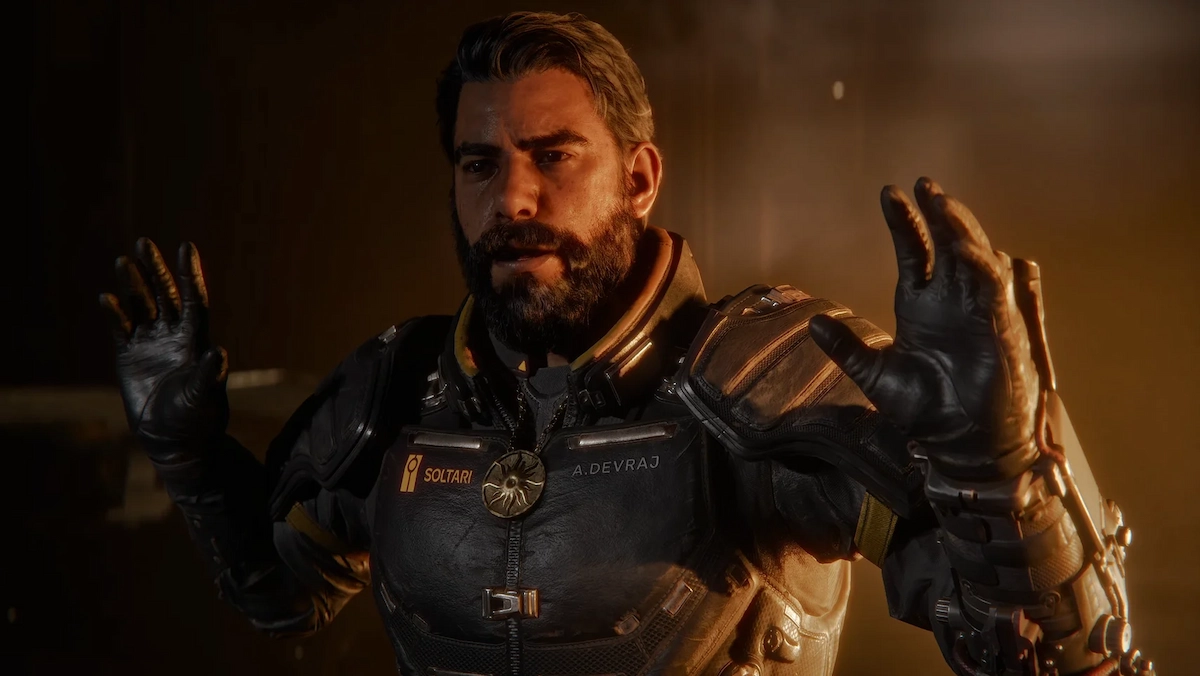
In Saros, we follow Arjun Devraj, an individual investigating an anomaly on a planet called “Carcosa”. The anomaly itself is called “Saros”, which is, naturally, where the game gets its name.
For the most part, every entity we fight originates from Saros, while Carcosa is a dimensional collapse where time seems to stand still, a bit like Doctor Strange with the Time Stone.
The protagonist and the characters surrounding him aren’t exactly the most compelling when it comes to personality and development. I didn’t feel a lot of emotional investment, and the premise is one we’ve seen many times before: the knight tries to save the princess from the fearsome dragon, except here the dragon is nowhere to be found and the princess doesn’t want to be rescued.
Without giving too many spoilers, at one point I felt that the main inspiration for the story was the Silent Hill series, but I’ll leave that debate to you.
Hats Off to Housemarque!
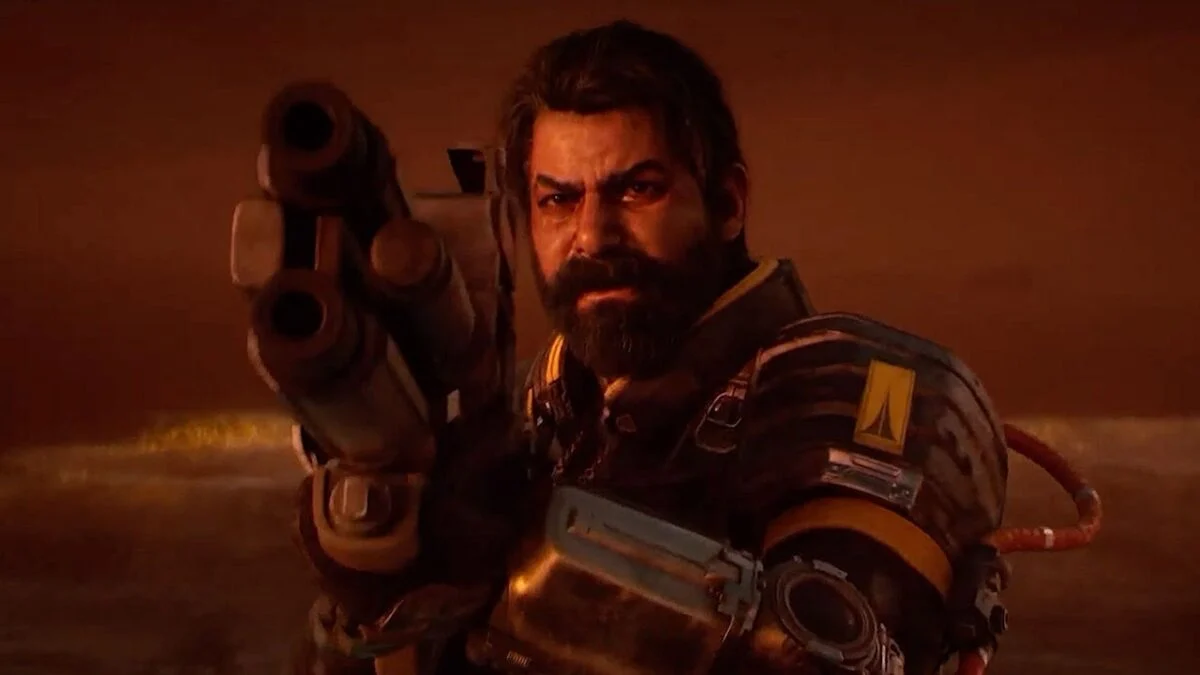
Saros proved to me that even in a saturated genre, there’s always room for something truly exceptional. With outstanding gameplay, a dream soundtrack, and a Cosmic Horror art style unlike anything you’ve seen before, Saros has become one of my favorite games of this year.
Even with a few things that feel slightly out of place, I have full confidence that Housemarque will continue delivering titles just as remarkable as this one in the future.
Final Score: 8.8/10

I’m passionate about books and video games. These two great passions represent, for me, a boundless universe where I can “escape” from reality whenever I need or want to. There are so many stories, worlds, and landscapes where I can instantly teleport that I don’t think a whole lifetime would be enough to explore them all (though it would be my greatest dream to be able to).