


Last updated on March 19, 2026
NVIDIA just dropped a bombshell at GTC 2026, and it’s not another RTX 50-series refresh. DLSS 5 promises to rewrite PC graphics rules by blending game engines with real-time AI that adds Hollywood-level lighting and materials on the fly. CEO Jensen Huang called it “the GPT moment for graphics,” a massive leap from upscaling tricks to actual scene enhancement. Coming fall 2026, here’s the full breakdown for gamers wondering if it’s worth the hype.

From Upscaling to Neural Rendering Revolution
DLSS started as a smart way to boost frame rates through AI upscaling back in 2018. Each version piled on features: frame generation in DLSS 2, ray reconstruction in 3, and multi-frame magic in DLSS 4.5 earlier this year. DLSS 5 flips the script entirely. Instead of just making games run smoother, it analyzes color and motion data per frame, then injects photorealistic lighting, skin textures, hair sheen, and fabric details that stay perfectly synced with the game’s 3D world.
Think of it like adding a neural post-process that understands scenes deeply—subsurface scattering on faces, dynamic shadows in backlit areas, or realistic cloth folds—all running at 4K in real time. NVIDIA showed Oblivion Remastered with potato-faced NPCs suddenly gaining lifelike hair and skin, while Resident Evil Requiem demos made Leon look eerily real (though some called Grace’s face uncanny). Demos used dual RTX 5090s, hinting at heavy compute demands during optimization.
How It Actually Works (Without the Tech Jargon)

DLSS 5 grabs a frame’s raw data and feeds it to a massive AI model trained on complex visuals: translucent skin, environmental lighting, even overcast skies. The AI doesn’t hallucinate wildly—it anchors everything to the source geometry for frame-to-frame consistency, avoiding the artifacts that plague older filters. Developers keep full artistic control via Streamline integration, NVIDIA’s plug-and-play framework for DLSS, Reflex, and friends.
Performance gains? Still there, but secondary to visual upgrades. Expect playable 4K ray-traced experiences that rival path-traced offline renders, all interactive. It’s not “Snapchat filters on games” as some critics snarked—it’s generative AI fused with handcrafted assets for next-gen fidelity.
Confirmed Games and Launch Timeline

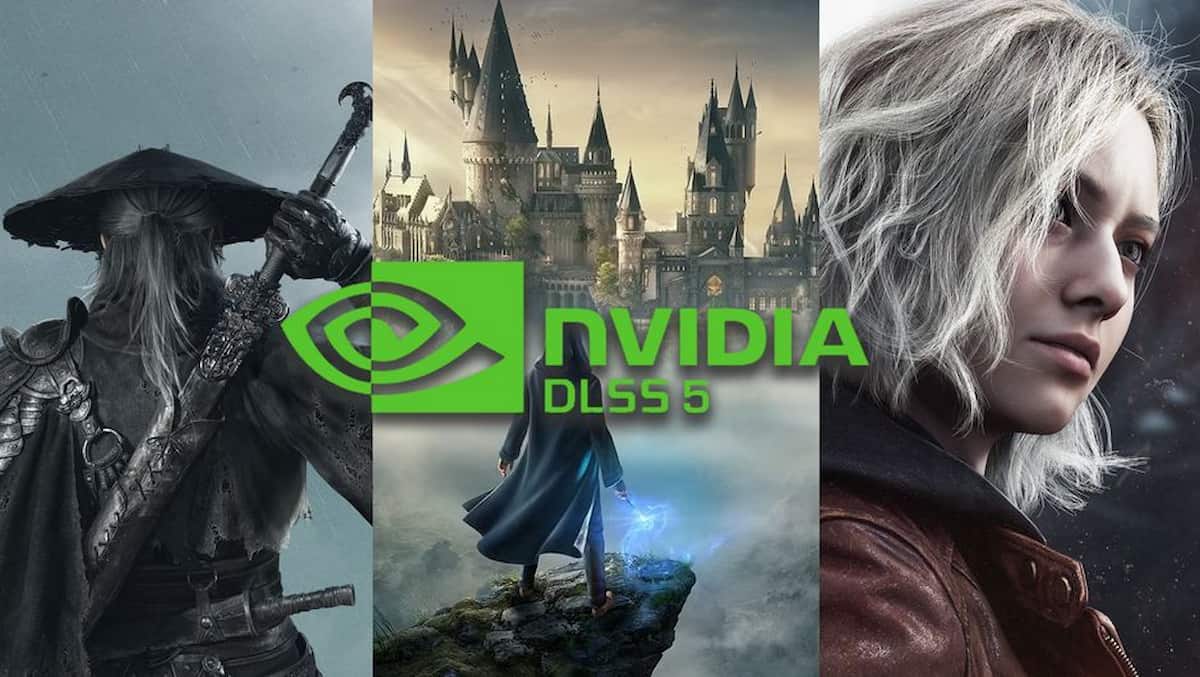
Fall 2026 rollout starts strong with heavy hitters: Assassin’s Creed Shadows, Starfield, Phantom Blade Zero, Hogwarts Legacy, Delta Force, Black State, NARAKA: BLADEPOINT, Resident Evil Requiem, and more like AION 2, Justice, Sea of Remnants, and Where Winds Meet. Oblivion Remastered already demos the tech, suggesting retro upgrades ahead. Publishers like NCSoft, Capcom, and Sony seem on board early.
No word yet on RTX compatibility, but expect RTX 40/50-series focus, possibly RTX 30 support after tweaks. Streamline should ease adoption across thousands of titles long-term.
What Gamers Should Expect (Good and Bad)
DLSS 5 could close the gap between real-time and cinematic rendering, making midrange RTX cards punch way above weight. Imagine Starfield planets with volumetric godrays and lifelike foliage, or AC Shadows bustling cities that feel truly alive—all without tanking FPS. Backlash already brews over “AI slop,” but demos suggest controlled enhancements, not overprocessed mush.
Caveats: optimization needed (dual-GPU demos scream work-in-progress), potential uncanny valley for faces, and developer buy-in required. Still, if it delivers half the promised leap, 2026 becomes the year PC graphics hit escape velocity.
DLSS 5 isn’t incremental—it’s foundational. NVIDIA bets big on neural graphics defining the next decade, much like shaders did 25 years ago. Gamers on newer RTX hardware should watch closely; this could transform libraries overnight.

I’m passionate about books and video games. These two great passions represent, for me, a boundless universe where I can “escape” from reality whenever I need or want to. There are so many stories, worlds, and landscapes where I can instantly teleport that I don’t think a whole lifetime would be enough to explore them all (though it would be my greatest dream to be able to).




DLSS 5 is basically a yassification filter for games. It’s moving away from just making things run faster and is now literally repainting characters and lighting with AI.
It feels like NVIDIA is solving a problem nobody had while ruining the actual art style of the games.