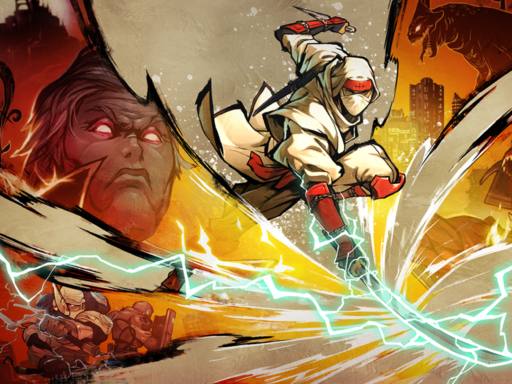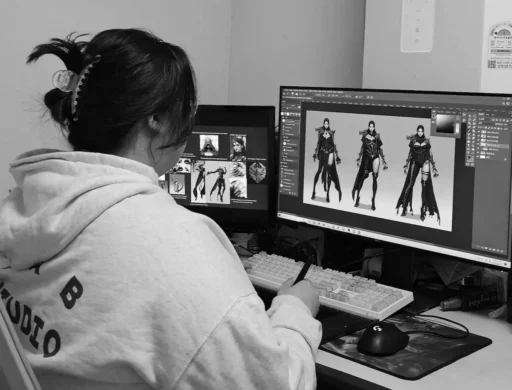
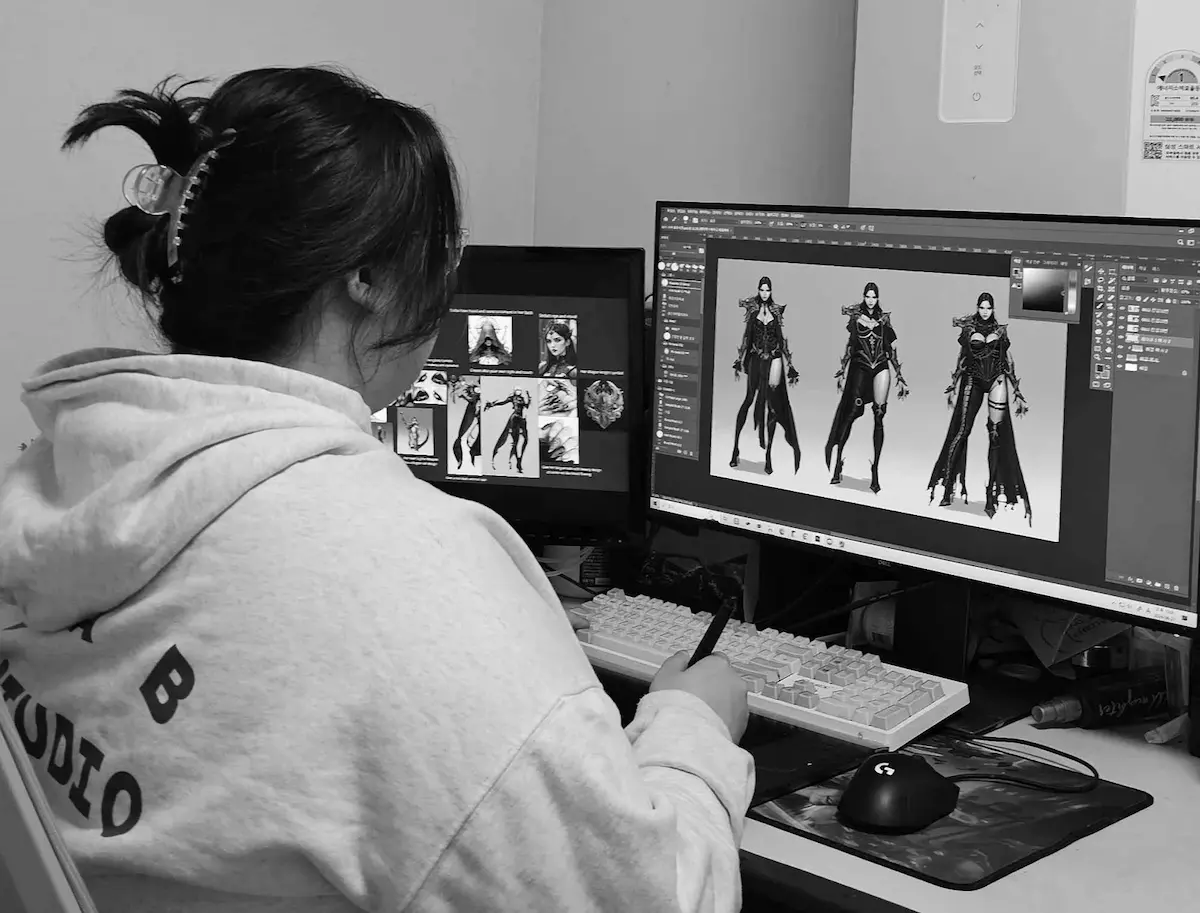
I had the opportunity to interview Mania Carta, CEO of Sandstorm Studio Japan, an experience that gave me a rare insight into how a top Japanese studio operates. Our discussion covered both his vision for the industry and the creative direction Sandstorm Studio is taking in its future projects. It was an open dialogue, full of ideas and inspiration, that confirmed for me the passion and professionalism of their team.
Question 1 –
- I saw that Sandstorm finished over 300+ projects, in how many years did you achieve that?
Answer –
It took me 2 years to achieve more than 300 projects. During that time, I focused on developing my skills in Blender, which allowed me to create a wide range of character designs both personal projects and work for clients—as well as assets and content for games.
Question 2 –
- I saw that you helped Neowiz in creating Lies of P, is your team also working on the sequel to that game?
Answer –
We supported Lies of P by developing assets, props, and outfit production for the game with our partner and team members. However, I can’t talk in detail about what’s coming next. The only thing I can say is that there’s more cool action coming from Neowiz, as they are the main creators of the game.
Question 3 –
- What are your expectations for next year, from everything in terms of partners and numbers of projects reached?
Answer –
we are a boutique studio offering a comprehensive range of services, including 2D/3D model sheets, anime, stylized characters, digital humans, cel-shading, AAA characters, creatures, mecha, environments, game assets, motion design, AI-driven solutions, music videos, Web3 content, cutscenes, game development, and full CG production pipelines. As also we outsourcing studio, and my studio has only become operational this year.
At the same time, we’re also developing our own original IPs, but I can’t share details about them yet. What I can say for now is that we’re working on three IP games: a hack-and-slash title, a cyberpunk game, and a cel-shaded fighting game.
We also started partnerships with other studios this year from different regions, and with our new technology that I took time to develop, we are expanding our network to bring something truly cool to the gaming market in the future
Question 4 –
- It’s very interesting that you are developing your own IP’s, i assume those 3 IP’s are external, for other developers, right?
Answer –
Everything will be developed in-house by Sandstorm using blender and unreal engine as our main technology. We are focusing on high-end graphic visuals, but we cannot yet describe exactly how it will look on screen. The only thing we can say is that we are working very hard to achieve our vision.
Question 5 –
- I was very curious about that “The Last Isteria” project i stumbled upon, is it a game or just a personal project.. can you tell me more details about it?
Answer –
The Last Isteria is an unknown-code project I started two months ago after developing a technology that significantly speeds up character production and visual development with blender. This project is never meant to truly end, each time a new force emerges, a new powerful knight appears as well. There is an immense amount of hidden lore and mystery surrounding it. Whether it is a personal project or a game, I cannot say yet. For now, all I can ask is to wait and see.
Question 6 –
- You said you started partnerships with other developers from across the region, as China is growing to be a very important part of the current gen AAA gaming, can you confirm that you are working on titles from across China?
Answer –
We are currently partnered with a studio we have worked with since the launch of our studio, based in Vietnam. In the future, we plan to partner with more studios as well. However, everything we build will be developed in-house, as our technology is something very few studios know how to use. That is the reason I founded and created Blender Academy in Tokyo—to nurture the next generation of CG and graphics talent.
Question 7 –
- Another mention, those 3 games that you mentioned above, do you think we will see an announcement for them soon? Or at least, they are releasing in this generation? (2026-2028)
Answer –
Maybe but I can’t say much right now. The only thing I can share is that we’re working extremely hard, focusing on speed, creativity, and delivering something truly unique to the market something other studios can learn from when the time comes.
Question 8 –
- What is your dream developer/publisher that you want to team up and work on one of their titles?
Answer –
That’s an interesting question.
I want to work with passionate artists who aim to create real action games with a unique style. Studios like Square Enix, FromSoftware, Capcom, PlatinumGames, Bandai Namco, Guerrilla, Naughty Dog, Insomniac, Nexon, Wemade, Kojima Productions, Konami, Atlus, Sandfall Interactive, and many others are deeply inspiring to me.
My studio is still very new—just about a year old—but I truly enjoy building things my team and I can be proud of. Game development is never easy; it’s a path full of challenges, and every year countless titles are released, proving how talented this industry is. I once thought of working alone, but I discovered the real magic lies in connecting passionate creators. That feeling began when I brought artists together at Sandstorm—where the adventure truly started. I chose a path full of competition and challenge because that’s what drives me.
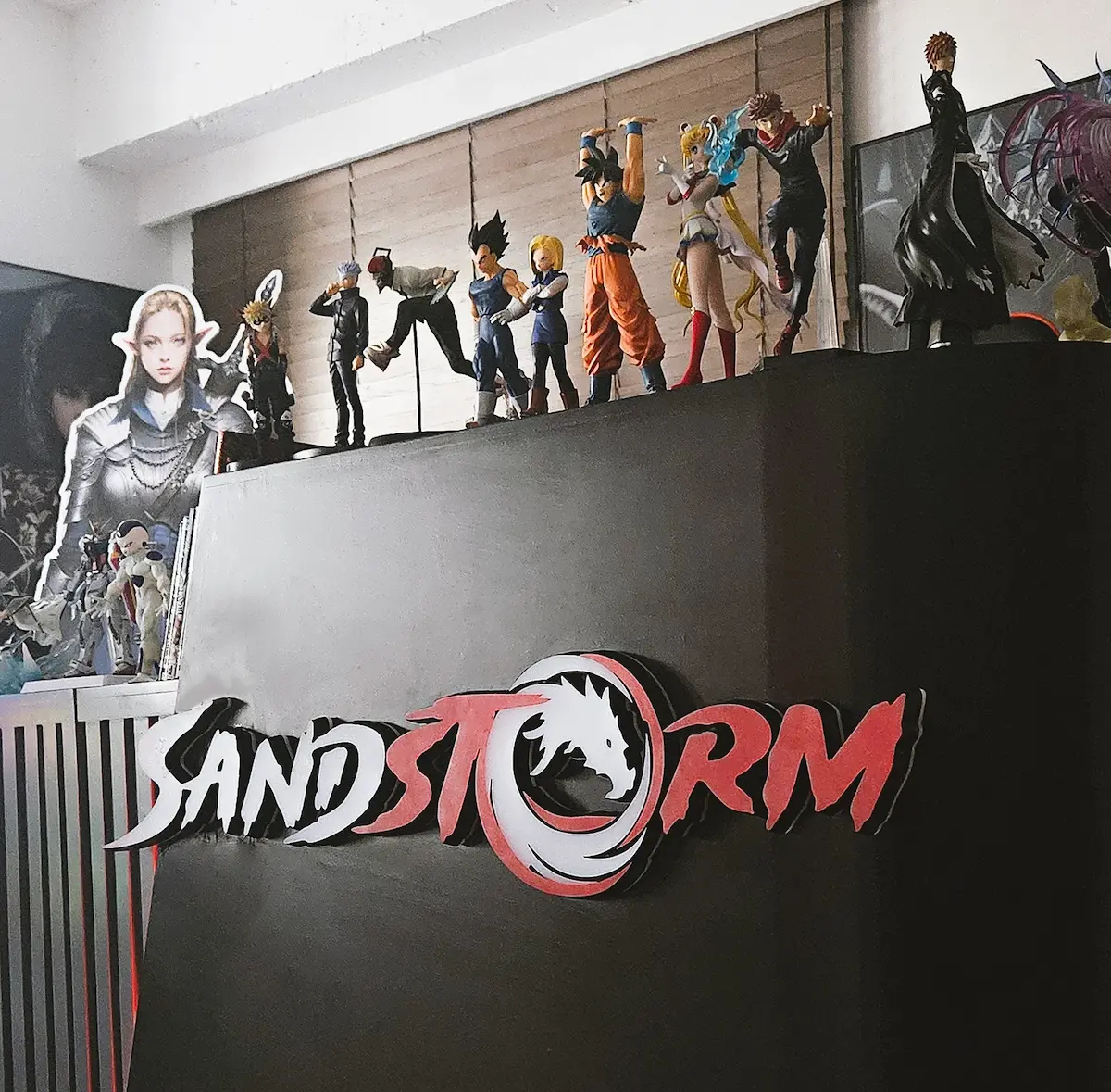
I founded Sandstorm in the heart of Akihabara, Tokyo, surrounded by legendary studios with decades of experience, and that has always been my motivation.
Question 9 –
- What was your favorite project to work on along with your team?
Answer –
My first project that we worked on as a team at Sandstorm was Code Enetra. It was the first time we came together to test our capabilities as artists and see what we could truly create. The project started about six months ago, right after I launched the studio’s operations, and I was honestly surprised by the results we achieved.
Even though it was only meant as a test, every core technology I had been building and wanted to implement was successfully proven. Of course, many things went wrong—especially financially but I chose to take the risk, even sacrificing my own income, to see my team grow. I also helped open doors for some of them to find opportunities when doors had been closed before, and seeing such passionate artists finally succeed truly made me happy.
Question 10 –
- How hard it was to start the company?
Answer –
Starting Sandstorm was extremely challenging. When I first created the business plan, it was around 68 pages long each page a guide for how I wanted to achieve my vision. Despite my skills, I was rejected by everyone. At first, I thought others would be interested in building the company with me, but I eventually found myself completely alone. That’s when I decided to build everything by myself over the next two years from the company website and services to the brand image, the team, and eventually Blender Academy.
I often asked myself why I chose this path instead of taking a stable full-time job, but I’ve always been someone who values growth and self-development. When obstacles appear, I face them head-on. There are two key lessons I learned while building Sandstorm: First, you need to fail and fail fast so you can understand what went wrong and fix it. Second, you need absolute focus. With focus, you can build a strong business and succeed over time. Failure isn’t the end for a company it’s the foundation for growth. Sandstorm is made of two words: sand and storm.
The sand represents the passionate people we gather by connecting with one another, and the storm represents the speed and impact we deliver. That is what my company stands for. I won’t hide the fact that nearly 90% of the company was built by me, but my goal has always been to give opportunities to artists who never had the chance to grow, despite having real skill. That is why I created Sandstorm a place for passionate artists who can be shaped into legends.
Huge thanks to Mania Carta for letting me ask her these 10 questions, I wish you continued luck in growing your studio and staying on track!

A true fanatic of the Asian gaming industry, especially China. Passionate about modern gaming, cinema and mythology. Dante always gives us a helping hand when it comes to a Chinese title.