Last updated on February 25, 2026
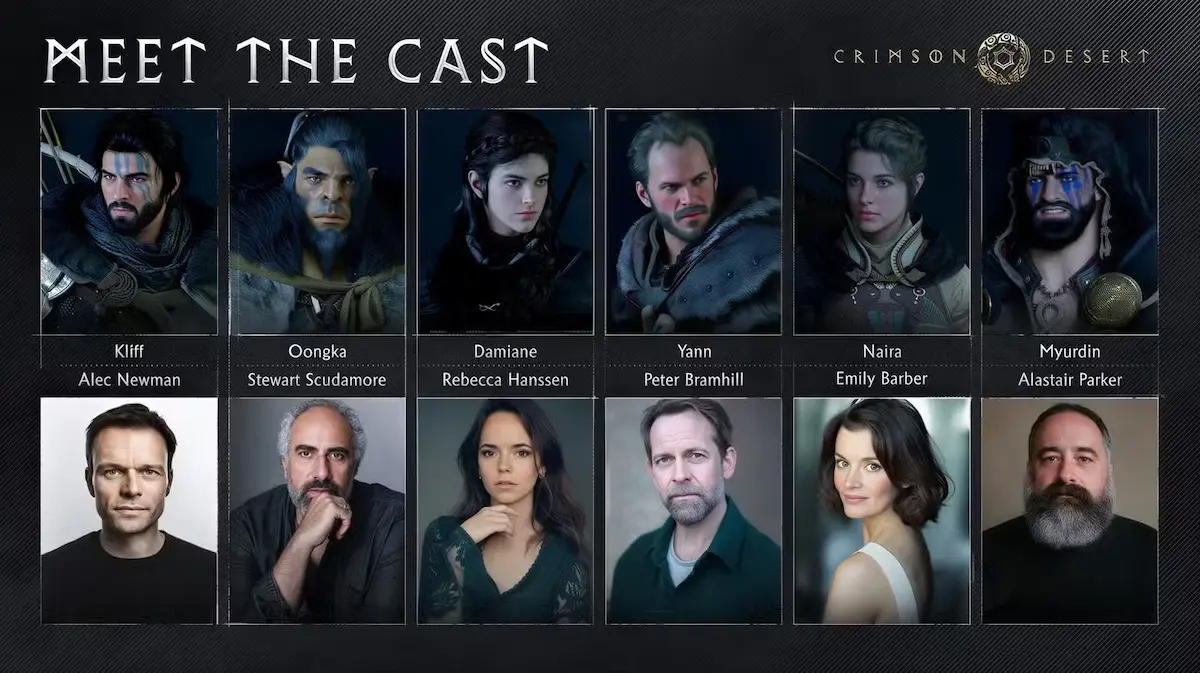
When Alec Newman first stepped into the recording booth for Crimson Desert, he didn’t even know he was voicing the main character.
Back in 2021, the project was still taking shape at Pearl Abyss. Scripts were evolving, the world was still forming, and even the actors were feeling their way through the dark.

“Sometimes, as actors, we don’t get the full picture at the start,” Newman admits. For a while, he had no idea Kliff would carry the entire game on his shoulders.
Fast forward to 2026. With launch just around the corner, Kliff has become one of the most defining roles of Newman’s career. “I’ve played this character longer than anything else,” he says. And you can hear the weight of that journey in his voice.
Newman is no stranger to iconic roles. He once portrayed Paul Atreides in Dune, brought menace to Adam Smasher in Cyberpunk 2077, and won a BAFTA for his work in Still Wakes the Deep. Yet Kliff feels different. More personal. More lived in.
Building Kliff from the inside out
Open world protagonists face a unique challenge. They must feel grounded while doing everything. Warrior. Leader. Explorer. Sometimes thief. Sometimes savior.
To avoid turning Kliff into a blank slate, Newman leaned into his Scottish roots. He imagined Kliff as a wary Highlander, shaped by hardship. The inspiration even came from someone deeply personal: his late father in law, Graham Fleck.
A lower register. A voice almost like a restrained growl. Dangerous, but warm. Loyal.
That emotional blueprint helped define Kliff’s place among the Greymanes, a tight knit band of warriors who form the emotional backbone of the story. Beneath the cynicism and grit, Kliff carries a deep sense of family.
More than one hero
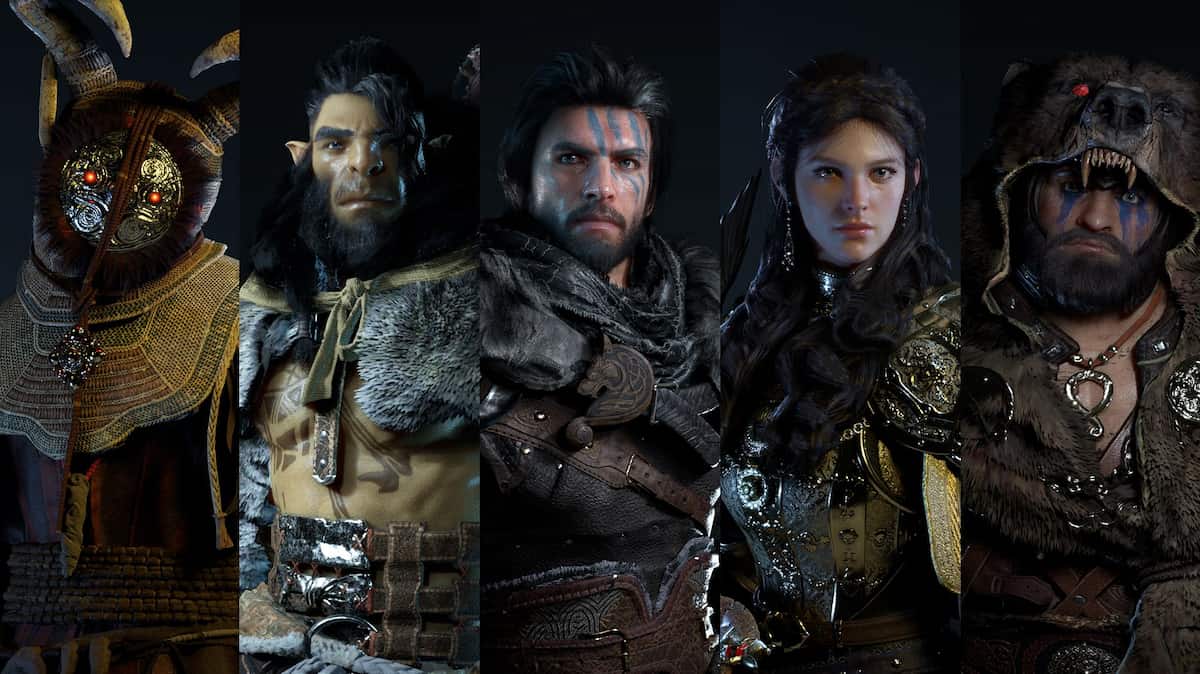
One of Crimson Desert’s boldest moves is letting players step into three fully voiced protagonists.
Alongside Kliff, players control:
-
Oongka, a stoic Greymane warrior
-
Damiane, a fugitive who becomes entwined with their fate
Oongka is voiced by Stewart Scudamore, known for his work in Carnival Row and Arcane. His take on Oongka emphasizes restraint. Silence not as emptiness, but as thoughtfulness.
Damiane is portrayed by Rebecca Hanssen, recognized for roles in Stellar Blade, Baldur’s Gate 3 and The Witcher. For Hanssen, Damiane was cathartic. Assertive. Principled. Unapologetically strong.
Allowing players to inhabit three distinct, fully voiced characters inside a seamless open world is not just ambitious. It’s borderline reckless in terms of production complexity. But that ambition is precisely what defines modern AAA games.
How acting in games quietly evolved
To understand how we got here, you have to look back.
Veteran voice actor Jennifer Hale has seen the transformation firsthand. From the early days of heavy handed performances designed to compensate for stiff visuals, to today’s nuanced, almost cinematic subtlety.
Her performance as Commander Shepard in Mass Effect proved something powerful. Players don’t just accept performances. They attach to them. “FemShep” became the default Shepard for many fans purely because of Hale’s emotional authenticity.
Technology helped. Performance capture, more advanced facial animation, better direction. But what truly changed was expectation.
Actors were no longer just delivering lines. They were carrying entire emotional arcs.
Still, some things remain old school. Cold reading is common. Recording alone is the norm. Even in massive productions, actors often perform without scene partners. On rare occasions, magic happens, like during Hale’s work on BioShock Infinite, where she could actually bounce energy off another actor in the room.
Those moments are rare. Development logistics usually get in the way.
When actors become developers
In recent years, something even more interesting has happened. Actors stopped waiting for opportunity. They started creating it.
Date Everything! is a perfect example. Developed by Sassy Chap Games, founded by Ray Chase and Robbie Daymond, the project was born from a simple realization: voice acting careers are fragile.
Instead of chasing auditions endlessly, they built their own game. A dating simulator where players romance household objects.
But here’s the twist. They structured contracts to give actors residuals, something practically unheard of in games. The result? Over 700,000 copies sold and a studio now working on even bigger projects.
The rise of Critical Role follows the same logic. Voice actors leveraging creativity and business acumen instead of waiting for permission.
Jennifer Hale calls it empowering. A model for the future.
Bringing Pywel to life
Recording for Crimson Desert follows familiar industry rhythms. Actors typically begin with visual references. Character art. World design boards. Context.
Director Mark Healy played a crucial role in maintaining tonal consistency across years of scattered sessions. Actors might record scenes months apart that sit side by side in the final game. Emotional continuity becomes a mental marathon.
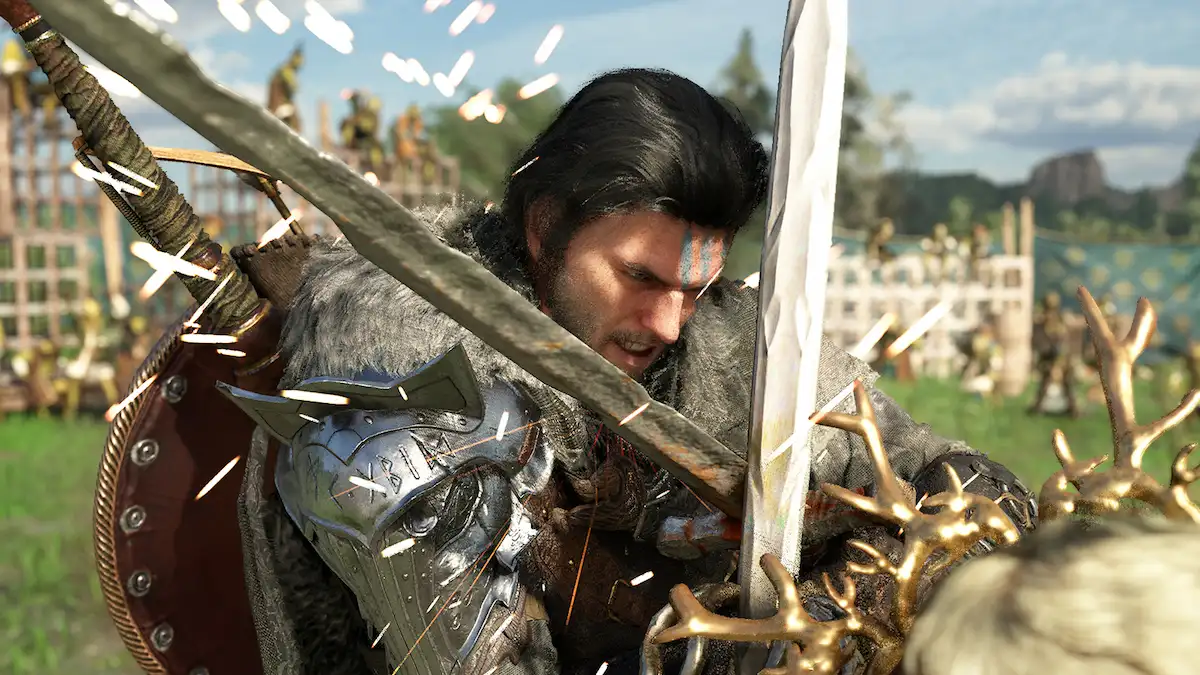
Combat recording is another beast entirely. Newman describes physically acting out fight scenes in the booth. Jumping. Straining. Swinging an invisible blade. “Act what you see,” became the mantra.
Sessions can stretch up to four hours. And once main character lines are done, actors often slip into minor NPC roles, adding texture to the world.
It is exhausting work. But it’s also deeply collaborative.
Release date
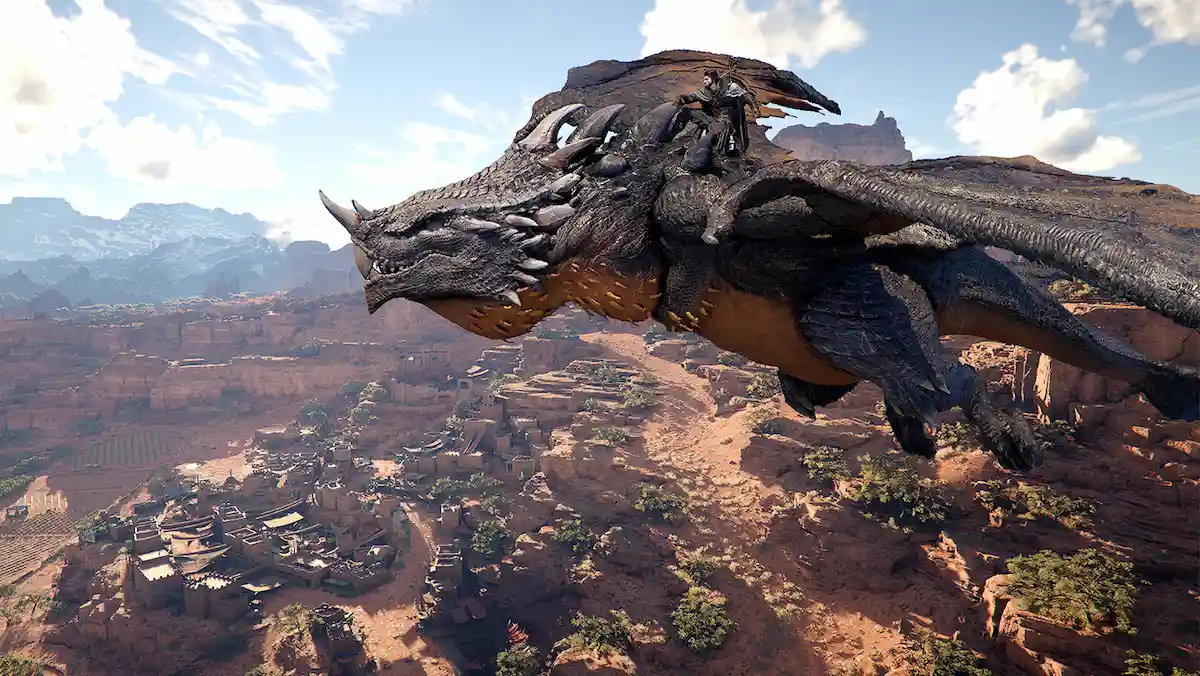
March 19 marks the release of Crimson Desert on PC(via Epic and Steam), PS5 and Xbox Series X|S. For players, it’s the beginning of an epic journey across Pywel. For the actors, it’s a farewell.

I write for Need4Games, mostly keeping track of what’s coming next. I cover showcases and release updates, put together quick lists when you just want the highlights, and I’ll post Steam deal roundups when the sales get wild. I play a lot of games, so I tend to look at games through that lens. No overthinking, just: what it is, why it’s interesting, and if it’s actually worth your time. I also stream now and then on Twitch.