Last updated on December 20, 2025
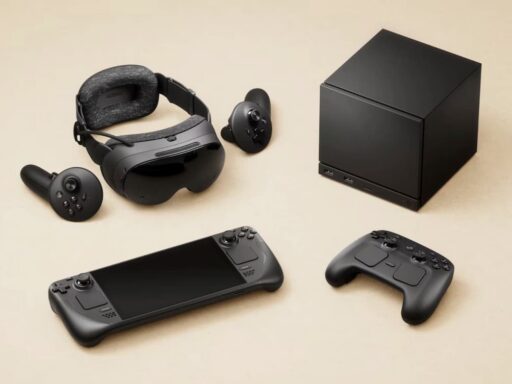
Valve has never been a company that looks comfortable standing still, and SteamOS is the latest proof of that mindset. While Steam Deck continues to dominate the handheld PC scene, the Bellevue studio is quietly laying the groundwork for a shift that goes far beyond a simple revision of its portable console. Two recent developments have sent the tech community into speculation mode: a new component called Lepton and the arrival of Arm support inside the SteamOS ecosystem. Taken together, they look less like incremental updates and more like the foundation for an entirely new generation of Valve hardware.

Lepton: Android’s doorway into SteamOS
Lepton’s appearance in the codebase immediately sparked heated debates across Linux circles. Valve no longer pretends this technology does not exist; it is now openly acknowledged as an internal solution derived from Waydroid, the open‑source project used to run an Android environment on Linux systems. The rebranding is more than a cosmetic tweak and signals that Valve intends to do more than simply bundle someone else’s work. Instead, the company seems to be shaping its own optimized compatibility layer, complete with its own visual identity, including a quirky frog mascot that already stands out as the emblem of this new piece of the puzzle.
Lepton’s implications are significant:
- The ability to run Android apps directly inside SteamOS.
- A bridge between the traditional PC world and the mobile ecosystem.
- A perfect base for ultra‑portable devices that need access to both games and apps on the go.
For a desktop‑focused user, that may sound like a niche advantage, but the picture changes completely once the second major change comes into play: Arm support.
Arm joins the Steam Runtime
Valve has updated Steam Linux Runtime to include support for the “linux‑arm64” architecture, a first for the company’s software stack. Until now, everything related to Steam and Steam Deck has lived in the x86 world of Intel and AMD processors. Moving toward Arm is a major step because this architecture underpins almost every modern mobile and low‑power device.
Arm brings several key advantages:
- Lower power consumption and excellent thermal efficiency.
- Strong performance per watt, crucial for portable and battery‑powered hardware.
- Alignment with wider industry trends, from Apple Silicon to Qualcomm SoCs.
Arm integration suggests more than a simple “Steam Deck 2”. It positions SteamOS as a platform ready for devices that demand long battery life, cool operation, and a high degree of software flexibility, instead of being tied exclusively to classic PC form factors.
Deckard, Steam Deck Lite or something bigger?

Unsurprisingly, speculation has exploded, and most clues seem to converge on a familiar codename: Deckard, the rumored standalone VR headset from Valve. A wireless VR device almost inevitably requires an Arm‑based SoC, an operating system capable of running Android applications, and aggressive power optimizations to remain usable without a cable. That is precisely the combo enabled by Lepton plus Arm support, making Deckard look more plausible than ever.
Toward a universal SteamOS
The introduction of Lepton and the extension of support to Arm show that Valve is chasing a more ambitious goal than a single gadget refresh. The company appears intent on turning SteamOS into a universal operating system, adaptable to almost any hardware configuration that makes sense for gaming and media consumption. No one outside Valve knows which device will be first to showcase this new era, but the pieces are already moving on the board, quietly and decisively. When Gabe Newell finally decides to pull back the curtain, this could mark the largest hardware expansion in Valve’s history.

I’m passionate about books and video games. These two great passions represent, for me, a boundless universe where I can “escape” from reality whenever I need or want to. There are so many stories, worlds, and landscapes where I can instantly teleport that I don’t think a whole lifetime would be enough to explore them all (though it would be my greatest dream to be able to).